
Legends and Lore
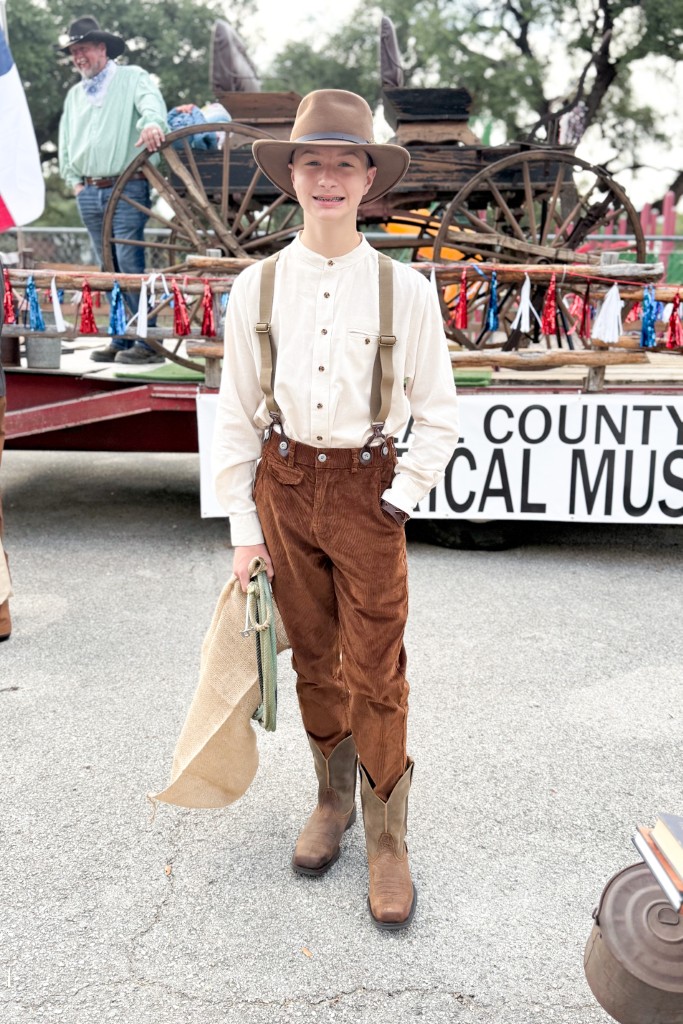
Banyan Frank Payne, portrayed by reenactor Simon Brice
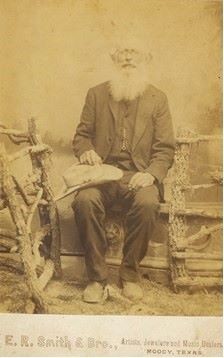 Frank Payne
 Jonas Brice
In 1866, B. F. (Frank) Payne, a strapping young lad of twelve years old, mounted his pony to go on a cow hunt with his dad and some of the other neighboring ranchers. This particular hunt would take place in the counties west of Travis County in the central part of Texas. The threat of conflict between the Indians and the Anglos in these sparsely populated counties kept everyone worrying, but these daring settlers took chances, chances that were sometimes costly.
Young Frank was excited about his first cow hunt. Little did he know how exciting things were going to get before the day was over. Frank’s dad, Banyan Payne, and the other men, all armed with rifles and revolvers, knew it was always better to be prepared.
Around noon, as the cow hunters were about to head home, they came upon a band of Indians. Since the Indians had not discovered the cow hunters, the cow hunters decided to attempt a surprise attack. As the men discussed their attack, Banyan Payne expressed concern about his young son being there. Frank was unarmed and just a little too young to be taking part in the raid. So Frank was instructed to stay put and not to leave the spot until the fight was over and they came back to get him. However, his curiosity was already beginning to grow.
The men slipped over the edge of the draw and surprised the Indians. The Indians quickly mounted their horses and attempted to escape. The chase was then on with the cow hunters closing in on the fleeing Indians. As they rode out of sight, Frank became a little concerned, and frankly, he really wanted to see what he was missing. So he put the spurs to his horse, edging closer for a better view. He soon realized what a huge mistake he had made.
Frank was just about to get close enough to see what was happening when a loose horse charged in his direction. This panicked horse spooked Frank’s pony. This caused the excitement to begin. That little cow pony got the bits in his teeth and ran hell-bent right towards the Indians. Try as he might, Frank could not stop his runaway pony. His dad watched in horror as his son rode right to the Indians. The Indians, on the other hand, shot arrows and threw lances at what they thought was a charging cow-hunter. Then the worst of the worst happened: something cut the reins, or maybe they just broke, and what little control Frank had was now gone, and the pony just ran that much faster. Frank, thinking quickly, took his rope, looped it around his pony’s nose, and eventually was able to get the horse under control. Luckily, he and the horse made it through the camp and beyond the Indians.
Frank’s Dad and the other men charged through the Indians in hopes of protecting Frank. They killed some of the Indians, while the Indians only wounded one cow-hunter. When Frank finally met up with his dad, they discovered that an arrow had cut his reins and there were two arrows in his saddle. It was a lucky day for this curious young lad.
In 1870, Frank joined the Texas Rangers under Captain Rufus Perry. This was a time when the Indian raids in Texas were many and brutal. This particular company of Rangers camped at the Little Red River near Camp San Saba. The Rangers received word that a band of Indians had raided near Dripping Springs and made off with about one hundred head of horses. The horses belonged to various ranchers in that area. The Rangers, whose main responsibility at this date was to protect the settlers from the Indians, wasted no time in mounting up and locating the trail the Indians left behind. The trail was near a place called Shovel Mountain. As they neared the mountain, they discovered a white man and behind him, a band of Indians hot on his trail. The man soon found himself in the protective custody of the Rangers, and the Indians suddenly had a change of heart.
The pursuit was on, and soon the Rangers managed to separate the stolen horses from the Indians. As was the usual story, the Indians outnumbered the rangers one hundred twenty-five to twenty-eight. Three rangers stayed with the recaptured horses while the rest made a stand. The Indians made three charges at the rangers before the rangers killed their chief. The chief’s horse (with the chief still aboard) ran wildly in among the Rangers. The Indians finally realized they had lost the battle, as well as the herd of horses and the body of their dead chief.
The names of some of the men in the command were: Captain Perry, B. F. Payne, Frank Enoch, the three Bird brothers, Griffin, Page, and Cox. The rest are unknown. The Ranger who was killed was one of the Bird Brothers. Of the twenty-seven men under Captain Perry, not one was over twenty-five years of age.
Frank Payne died in 1900. He is buried in Floral Cemetery in Leakey, Texas. He and his wife, Claudia, had five children. As of today, his descendants still live in the town of Leakey, Texas.
13-year-old Simon Brice portrayed Frank Payne. In Simon’s interview, he said it felt really good to get dressed up, “old school,” and to respect Frank Payne's life. Simon felt that, as far as fun or play, a twelve-year-old’s play or fun would be centered around work, and he was correct. He felt Frank probably enjoyed riding horses, so that made the work more fun. And maybe Frank played kick the can.
The part that Simon enjoyed the most was being dressed as Frank would have been 100 years ago and then, right after the parade, dressing normally again. He also enjoyed all the kids yelling at him to throw more candy and could not believe that they ran out of candy!
Simon felt that it was a little strange to think about the incident that Frank experienced since they were about the same age as when the incident happened. Simon said about that day in Frank’s life, “He survived! When he was 12, his horse ran toward a group of Indians, and arrows were being shot at him. The Indians would be really scary and I would have tried my best to make it through, but I’m not sure that I would have survived because I’m not as experienced as he was. It’s kind of crazy to think about somebody my age doing that. Maybe when your dad tells you to stay where you are, you should listen? Haha!”
The Real County Historical Museum was very excited to be able to have these three young people participate on our float. We try very hard to incorporate programs and stories that include younger people. After all, 100 years from now, the stories will be in the hands of their grandchildren, so maybe these three can pass on what they are learning about history to them! Thank you to your parents and to you for helping us bring history to the world!